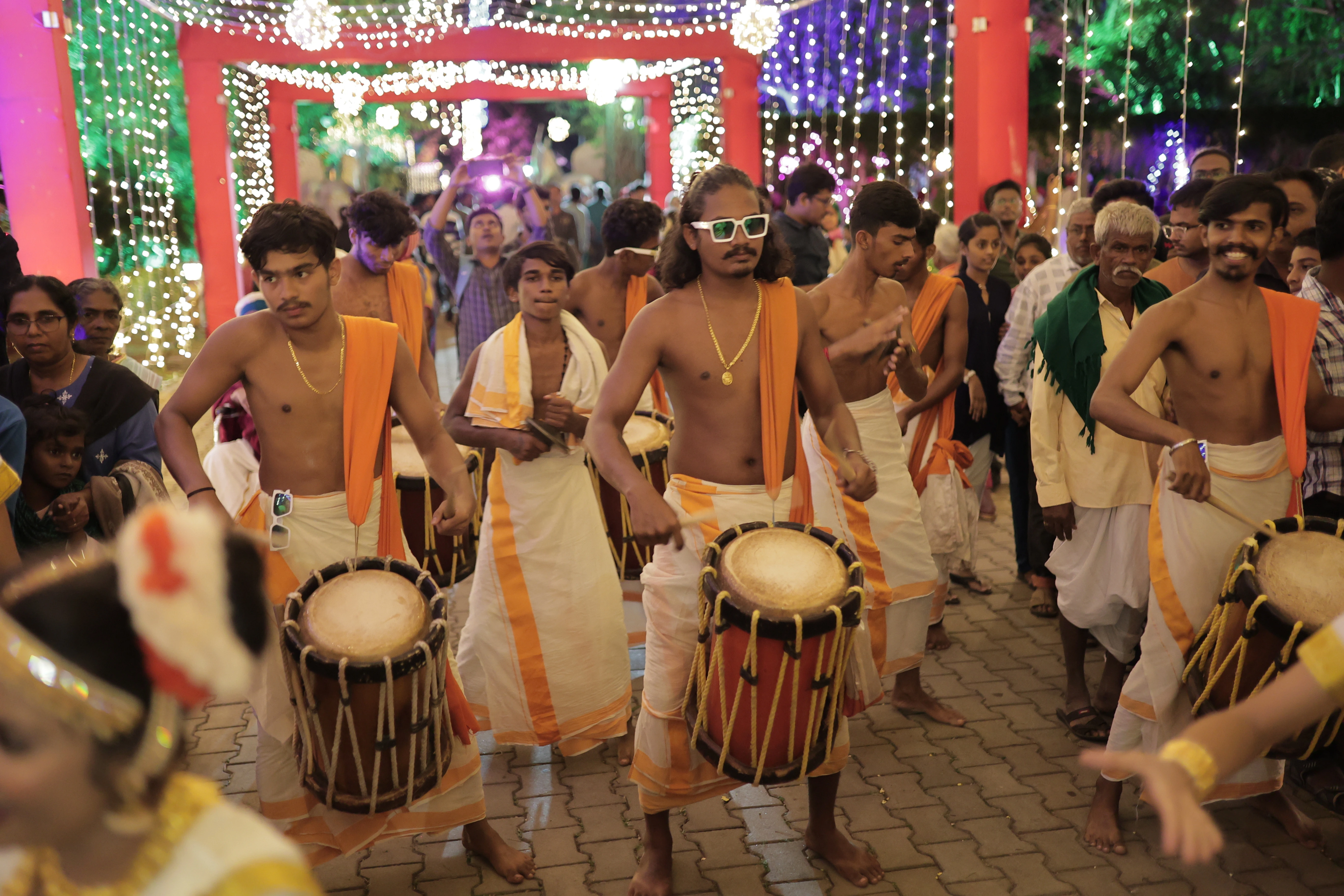
The Dasara festivities began with the Vijayanagar kings as early as the 14th-15th Century. The festival played a historical role in the 14th-century Vijayanagara Empire, where it was called Mahanavami and the festivities are shown in the relief artwork of the outer wall of the Hazara Rama temple of Hampi.
The Dasara festivities began with the Vijayanagar kings as early as the 14th-15th Century. The festival played a historical role in the 14th-century Vijayanagara Empire, where it was called Mahanavami and the festivities are shown in the relief artwork of the outer wall of the Hazara Rama temple of Hampi.
The Italian traveller Niccolò de' Conti described the festival's intensity and importance as a grandeur religious and martial event with royal support. The event revered Durga as the warrior goddess. The celebrations hosted athletic competitions, singing and dancing, fireworks, a pageantry military parade and charitable giving to the public.
After the fall of the Vijayanagar to Deccan Sultanates, these Hindu celebrations came to an end under Muslim rulers. The Wodeyars of Mysore formed a kingdom in Southern parts of the Vijayanagara Empire and continued the Mahanavami (Dasara) festival celebration, a tradition started initially by Raja Wodeyar in mid-September 1610 at Srirangapatna.